

CNES
The Centre National d'Études Spatiales (CNES) is a leading organization in the space domain, renowned for its ability to innovate and collaborate on strategic projects at both national and international levels. Established in 1961, CNES's mission is to propose space solutions to meet the needs of society, science, industry, and defense. It plays a central role in the development of space technologies and in supporting France as a global space power.
Areas of Expertise and Key Achievements
CNES is involved in several key areas of the space industry, including Earth observation, telecommunications, space science, microgravity research, and planetary exploration. Among its notable achievements, the Argos system, developed in collaboration with NASA and NOAA in 1978, is one of CNES's major contributions. This global satellite-based location and data collection system is essential for environmental monitoring and maritime surveillance.
CNES has also been a central player in the development of ESA's Planck satellite, which mapped the cosmic microwave background, providing crucial data for our understanding of the universe. Furthermore, CNES is known for its contribution to the Planck cosmology mission, a major project for the Institute of Space Astrophysics.
Recent Contributions and Notable Projects
Recently, CNES has been involved in a partnership with the start-up Kineis for the deployment of a nanosatellite constellation dedicated to the Internet of Things (IoT) and maritime surveillance. This initiative, aimed at extending the tracking capabilities of the Argos system, illustrates CNES's commitment to technological innovation and European sovereignty.
CNES also collaborates with numerous industrial and academic partners to develop cutting-edge technologies such as AI-simulated fluid systems in partnership with Clemessy and solutions for autonomous vehicles in collaboration with VEDECOM.
Position in the Technological Ecosystem
CNES positions itself as a key player in the French and European technological ecosystem. It collaborates with companies like Airbus, Thales, and numerous research institutes to promote innovation and the application of space technologies in various sectors, including defense, mobility, and environmental management.
CNES is also an active member of the Aristote association, which encourages technological innovation through partnerships with research organizations and companies. This collaboration strengthens the integration of digital and space technologies to address contemporary challenges.
Recent Developments and News
CNES continues to innovate and explore new technological frontiers. In collaboration with Capgemini, CNES is working on projects related to digital transformation and social and environmental responsibility. This partnership aims to use satellite data to support sustainable development and ecological transition initiatives.
Additionally, CNES is involved in the DEEL project, a Franco-Quebec collaboration aimed at developing robust and explainable artificial intelligence systems for aeronautics and embedded systems. This project illustrates CNES's commitment to staying at the forefront of technology in a constantly evolving world.
In conclusion, CNES remains a pillar of the French space industry, continuing to advance space technologies while addressing contemporary societal and environmental needs. Its commitment to innovation and international collaboration ensures its position as a leader in space exploration and technological application.
Établissement public à caractère industriel et commercial (EPIC), le CNES propose aux pouvoirs publics la politique spatiale de la France et la met en oeuvre dans 5 grands domaines stratégiques : Ariane, les Sciences, l’Observation, les Télécommunications et la Défense.
Articles liés
11 au total
Toulouse scales up with the ANITI AI Cluster: A national and European ambition for trustworthy AI
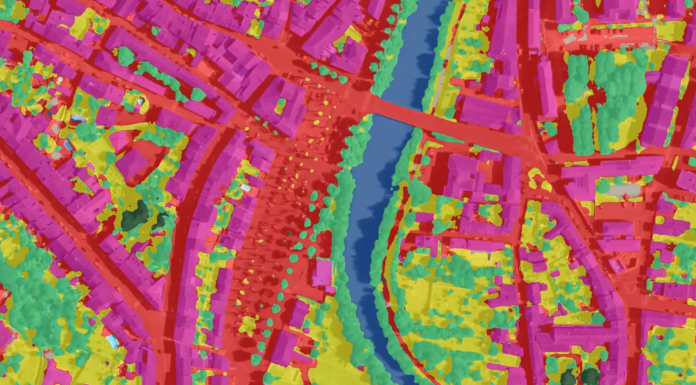
IGN relies on AI and deep learning to enrich land use data

Audacia and Starburst announce the launch of Expansion, a new investment fund dedicated to aerospace and defense start-ups
Climate tech start-up Kayrros backed by the "French Tech Souveraineté" fund in a €40 million financing round

Astrophysics: thousands of galaxy clusters discovered thanks to Artificial Intelligence
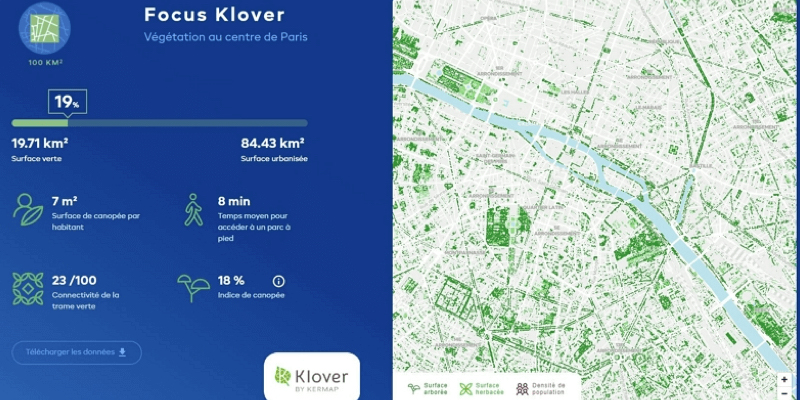
Kermap presents Klover, an observatory on the place of vegetation and the impact of climate change
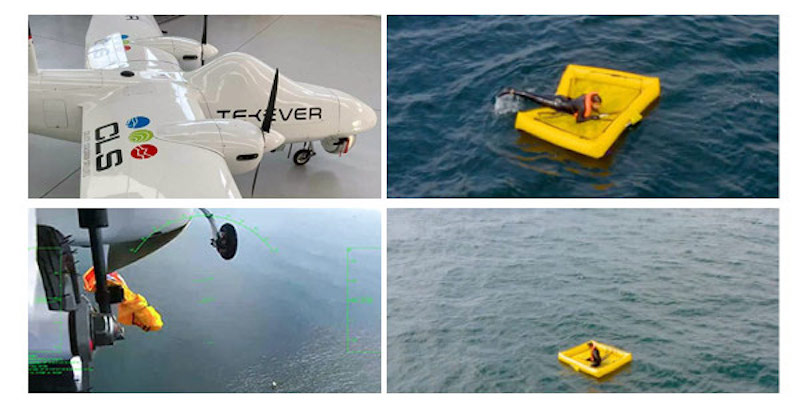
CLS wins a contract with the European Maritime Safety Agency for maritime surveillance and rescue by UAV

Future Intelligence, a convention dedicated to artificial intelligence and data, will be held from June 1 to 3

Digital transformation and climate change: CNES and Capgemini strengthen their collaboration

CNES and Clemessy develop a fluidic systems simulator using artificial neural networks